
01. Background
Problem
Trades Training BC was receiving a high volume of recurring inquiries from prospective students who were unsure how to begin a career in the trades. Common questions centered around apprenticeship vs. foundation training and where to search for relevant jobs.
At the same time, the existing internal jobs board was being retired to consolidate listings with WorkBC. With fewer postings available internally, this shift ensures students are directed to a single, reliable source for job opportunities, reducing confusion and maintaining search visibility.
Approach
The page was reconceived as both a career discovery tool and a guidance resource, designed to keep users engaged while reducing reliance on direct support.
To ensure accuracy and alignment with real-world trades pathways, the content and flow were reviewed with subject-matter experts, including post-secondary trades leadership and provincial trades administrators. Their insights informed both terminology and decision points within the experience.
Solution
Two complementary features were introduced:
Guided Job Search
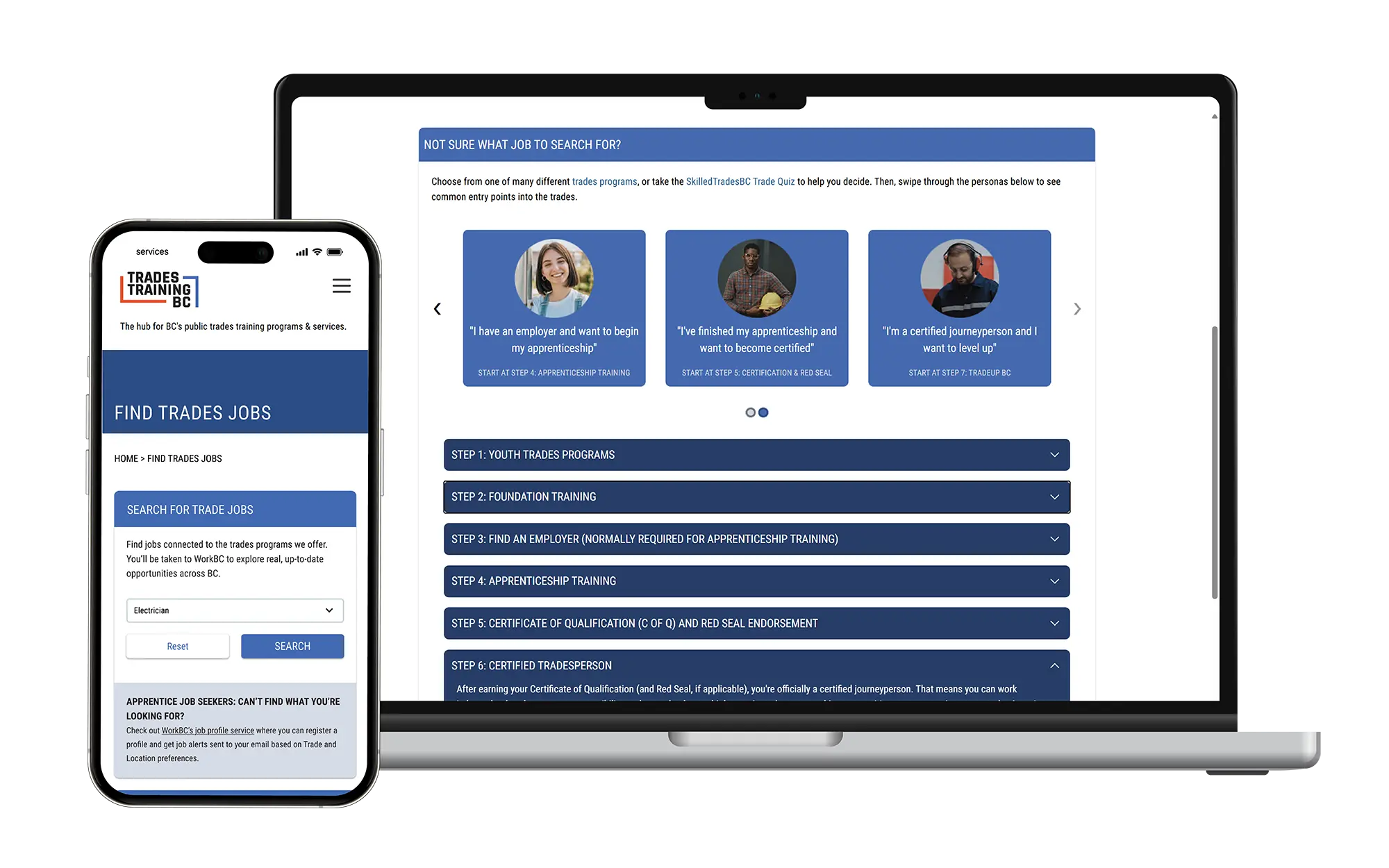
The internal jobs board was replaced with a role-based input that redirects users to WorkBC. Selecting a trade automatically links users to relevant job listings using standardized NOC codes, maintaining continuity while relying on a more robust external system.
Trades Pathway Integration
A “Not sure what job to search for?” section was added directly to the page, embedding a clear, step-by-step trades pathway. This allowed users to understand their options—such as apprenticeship or foundation training—without leaving the flow or consulting multiple sources.
02. User Journey Mapping
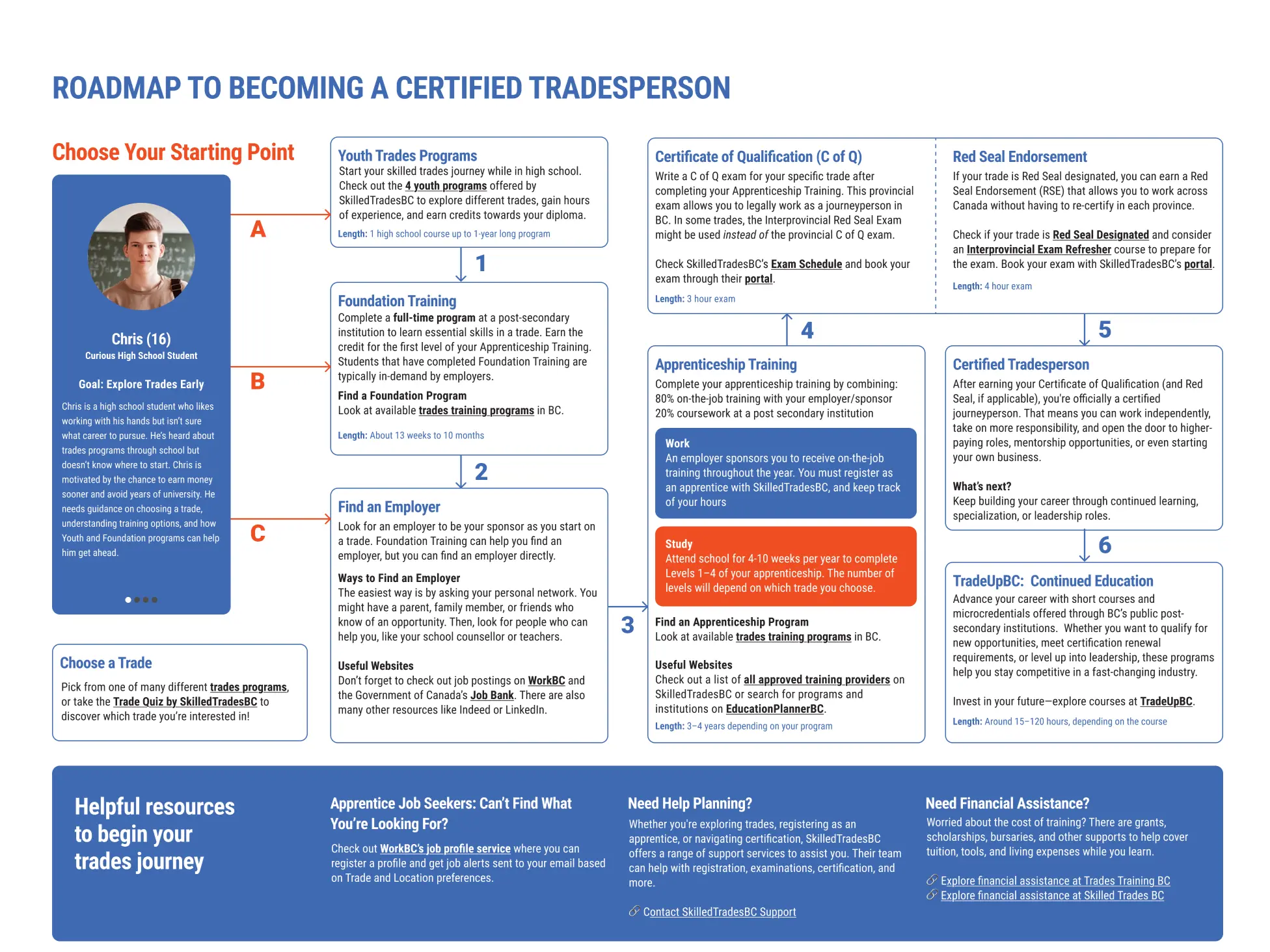
Research revealed that trades pathways vary significantly depending on a user’s background and entry point. These complexities were distilled into a concise journey map that outlines multiple valid starting paths and key decision moments.
The diagram was designed to be printable, with content also structured for clear digital presentation on the website, serving as a shared reference for both users and stakeholders.
03. Mobile Considerations
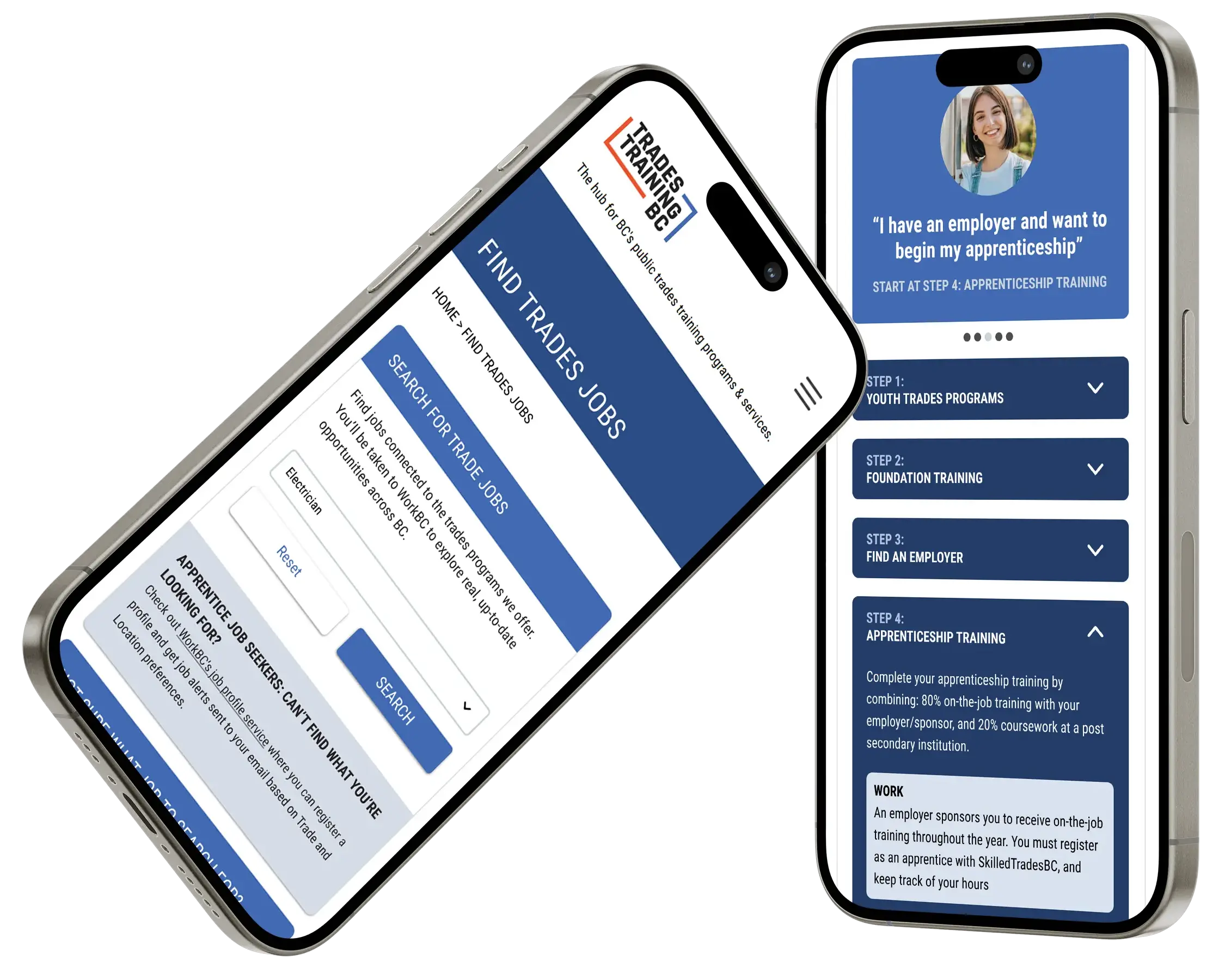
Analytics indicated that most users were accessing the site on mobile devices. The journey map was therefore translated into a mobile-first experience, prioritizing clarity and scannability over complex interactions.
Existing tools on SkilledTradesBC were intentionally leveraged rather than duplicated, keeping the solution lightweight and within budget constraints.
04. Outcomes
Monthly support inquiries dropped from ~30 to 1–3
Users were able to self-identify next steps without contacting support
The page continued to surface in trades-related search results, preserving SEO value
Let’s bring your ideas to life!


